In the metalworking and sheet processing industry, decoilers play a crucial role in ensuring smooth material handling. A decoiler, sometimes called an uncoiler, is designed to hold and feed coil materials like steel, aluminum, or copper into production lines. Understanding the working principles and structure of decoilers can help manufacturers optimize efficiency, reduce material waste, and maintain a safe working environment. LIHAO Machine offers reliable decoilers engineered for precision and durability, widely used in rolling, stamping, and cutting processes.
What Is a Decoiler?
A decoiler is a mechanical device used to unroll coils of metal sheet, wire, or other materials for further processing. The primary function of a decoiler is to supply continuous material to machines like presses, roll forming machines, and slitting lines. Without decoilers, the production flow would face interruptions due to manual feeding and material jams.
Key functions include:
Supporting heavy coil weights.
Feeding material at a controlled speed.
Reducing material deformation and tension problems.
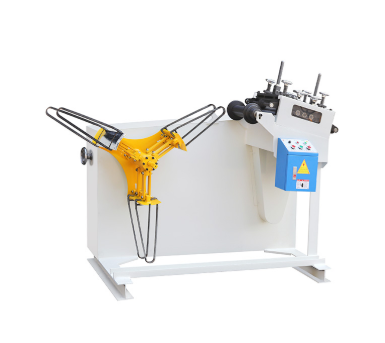
Structure of a Decoiler
Decoilers come in various types and designs, but most share some fundamental components. Understanding these parts is essential for choosing the right decoiler for your production line.
1. Coil Mandrel
The coil mandrel is the central shaft where the metal coil is placed. It can be hydraulic or mechanical, expandable to fit different coil inner diameters. Hydraulic mandrels offer smoother expansion and better stability, reducing the risk of coil slipping.
2. Frame and Support System
The frame holds the mandrel and supports the entire structure. A sturdy frame ensures that the decoiler can handle heavy coils without deformation. Some frames also include vibration-dampening systems to improve stability during high-speed operation.
3. Driving Mechanism
Decoilers may use motor-driven or free-running systems. Motorized decoilers can control the rotation speed of the coil, ensuring a uniform feed into downstream machines. Free-running or unpowered decoilers rely on tension from the production line to unwind the coil.
4. Tension Control System
A tension control system prevents material from slackening or stretching during uncoiling. This system may include brakes, clutches, or load cells to maintain consistent tension, crucial for processes like stamping or laser cutting.
5. Safety Features
Modern decoilers come with safety guards, emergency stops, and overload protection. These features protect operators from injuries and prevent damage to expensive materials. LIHAO Machine integrates safety mechanisms without compromising operational efficiency.
Working Principles of Decoilers
Decoilers operate on simple yet precise mechanical principles. Here’s a step-by-step overview:
Loading the Coil: The coil is placed on the mandrel and secured using hydraulic or mechanical expansion.
Adjusting Tension: The tension system is calibrated to match the production line speed.
Uncoiling: As the downstream machine pulls the material, the mandrel rotates, unwinding the coil. Motorized decoilers can actively feed material to match exact line speeds.
Material Feeding: Continuous and smooth material supply is maintained, reducing the risk of wrinkling or deformation.
Stopping and Replacing: Once the coil is depleted, the machine stops safely, allowing for quick coil replacement.
Types of Decoilers
Manual Decoilers: Simple design, operated by hand, suitable for small-scale operations.
Hydraulic Decoilers: Uses hydraulic expansion for coil support, ideal for heavy or large-diameter coils.
Motorized Decoilers: Equipped with a motor to control feed speed, widely used in automated production lines.
Uncoiler & Straightener Combo: Integrated solutions that uncoil and straighten metal sheets simultaneously, saving space and improving efficiency.
Advantages of Using Decoilers
Using a high-quality decoiler like those from LIHAO Machine offers multiple benefits:
Consistent Material Feed: Reduces production stoppages and material defects.
Enhanced Efficiency: Motorized and hydraulic systems streamline the uncoiling process.
Material Protection: Prevents coil deformation, scratches, and tension-related issues.
Safety: Reduces manual handling risks, protecting operators and machinery.
FAQs
Q1: Can decoilers handle heavy steel coils?
Yes, industrial decoilers, especially hydraulic and motorized models, can handle steel coils weighing several tons with stability and precision.
Q2: What materials can decoilers process?
Decoilers are versatile and can handle steel, aluminum, copper, stainless steel, and even non-metallic materials like plastic or paper coils.
Q3: How do I choose the right decoiler for my production line?
Consider coil weight, width, inner diameter, production speed, and whether tension control or automation is needed. LIHAO Machine can provide tailored solutions.
Q4: Are safety features necessary?
Absolutely. Safety features such as emergency stops, protective guards, and overload protection prevent injuries and material loss.
Q5: Can a decoiler integrate with straighteners?
Yes, many modern decoilers are designed as uncoiler-straightener combinations, improving material quality and saving space.
Conclusion
Decoilers are essential equipment for any modern metalworking or sheet processing operation. Understanding their structure and working principles helps manufacturers optimize production, protect materials, and ensure operator safety. Investing in a reliable decoiler, like those from LIHAO Machine, guarantees smooth operation, precise material feeding, and long-term efficiency. Whether for small-scale workshops or large industrial lines, decoilers remain a cornerstone of modern manufacturing.