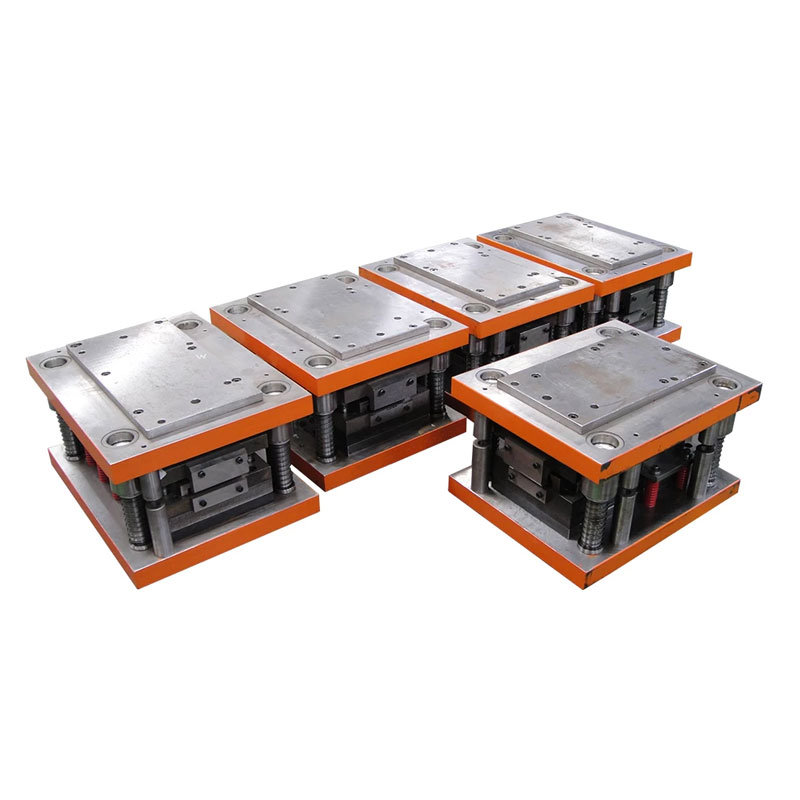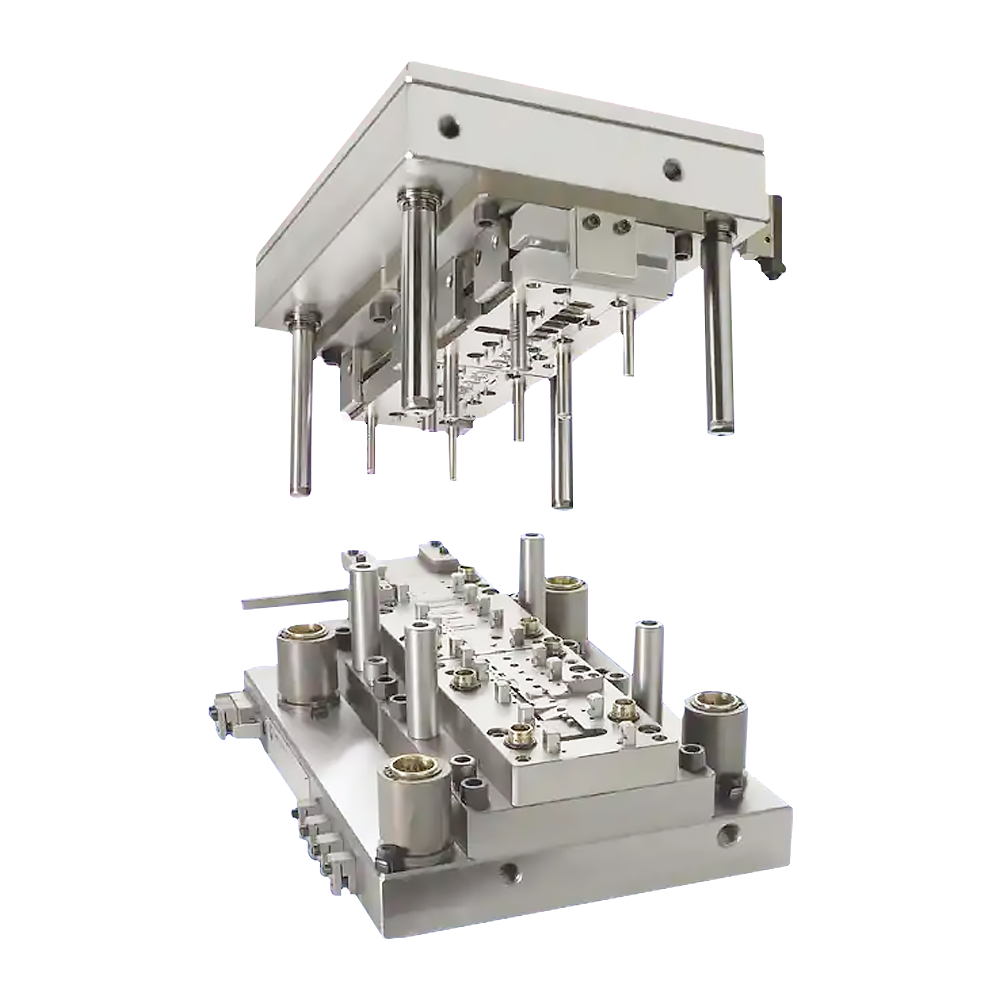
Customized Progressive Die for Metal Stamping
Key Advantages of Progressive Die Stamping
1. Cost Efficiency: Automated production lowers labor costs and enables mass production with economies of scale. Progressive dies also minimize material waste, further reducing overall production costs.
2. Precision: Tight tolerances (±0.01mm) due to consistent material feeding and alignment.
3. Versatility: Suitable for stamping various materials including aluminum, stainless steel, copper, and brass. Widely used in electronics, construction, and many other industries.
4. Fast: Fully automated and continuous feeding enables fast production, ideal for large quantities and tight deadlines.
Product Description
Progressive stamping is one of the most used manufacturing processes to produce metal parts efficiently. Manufacturers punch bends, and shapes metal to highly accurate parts in a single operation using Progressive dies. For businesses and firms in need of quick solutions in the fabrication of metals, progressive stamping gives them much-needed advantages like speed, cost and accuracy.
What is Progressive Die Stamping?
Progressive Die Stamping is a metal stamping process used to cut and form raw sheets of metal using a stamping die. It comprises several individual workstations which perform one or more operations on that part. The progressive die can perform various actions like cutting, coining, punching, bending, lancing, shaving, extruding, drawing and embossing, etc.
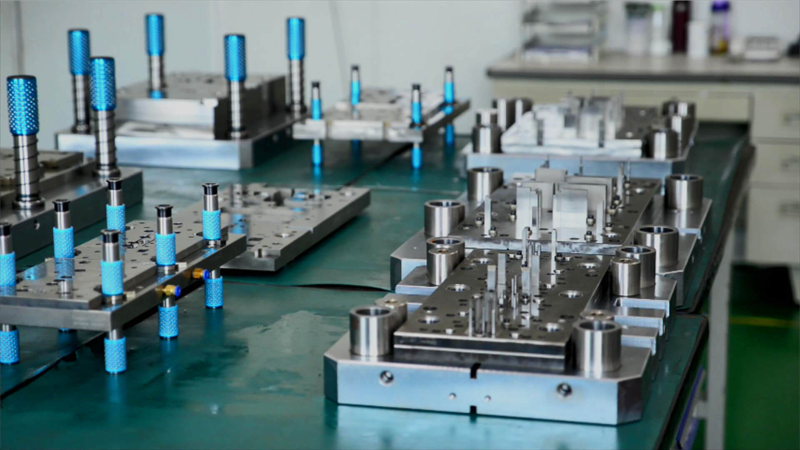
How does the stamping process work?
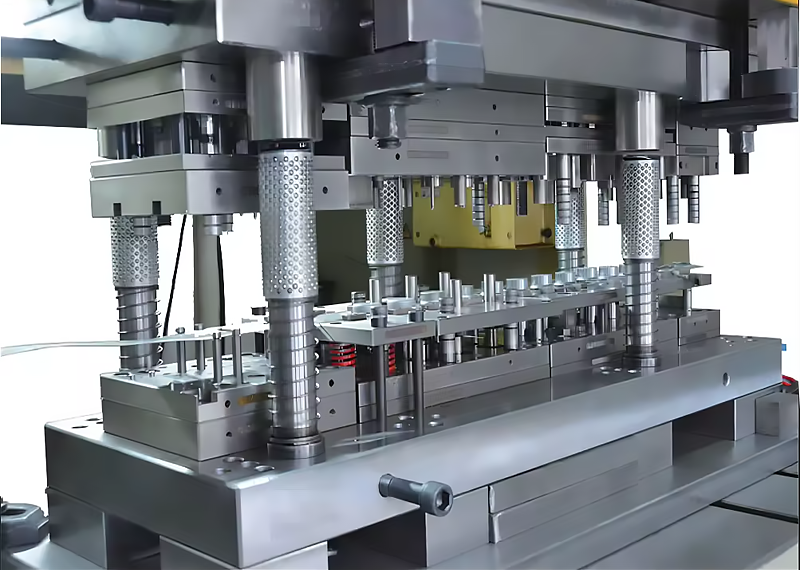
Progressive Die Stamping integrates the scattered process of traditional metal stamping into continuous action, realizing the integrated and efficient production of “material in → parts out”. The following is the explanation of each step:
1. Material Feeding: Coil stock is fed intermittently to the die at a preset pitch via an automatic feeding system.
2. Multi-Stage Forming: The inside of the die is divided into multiple stations (usually 4-20 stations), each station performs a specific operation to gradually complete the part forming.
3. Final Cut-off: At the last station, the finished part is separated from the strip by a cut-off die, while the scrap (skeleton strip) is cut and discharged.
How do we do it?
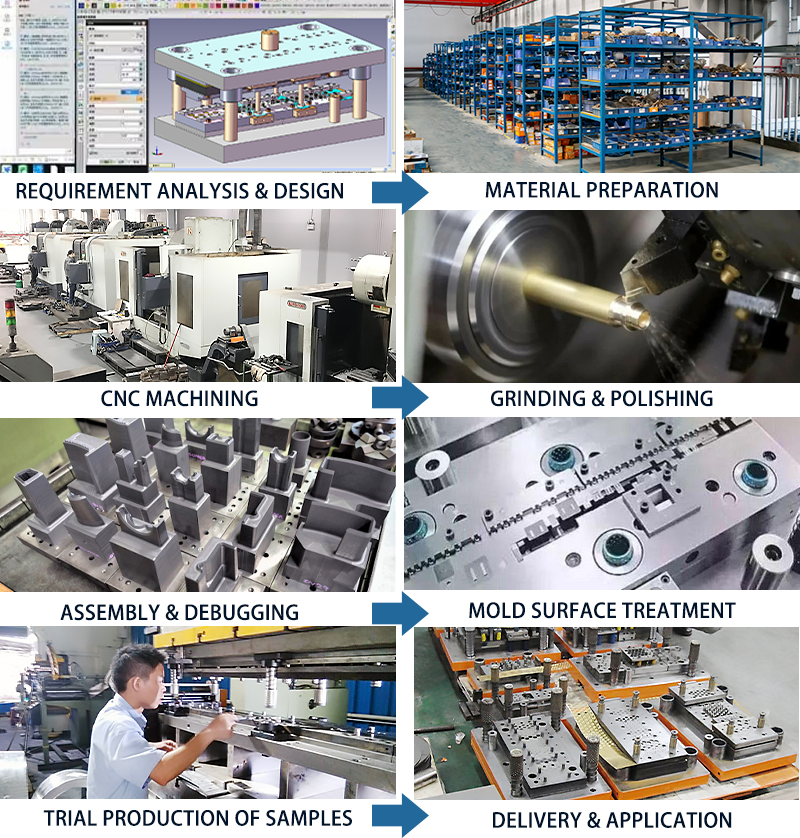
1. Planning and Design: The first step for creating a high-quality finished part is planning and designing a custom tooling to meet the specific needs. A prototype is created to be sure about the specifications planned for the actual part.
2. Preparation of Dies: A stamping die is a specially shaped tool that is used to cut or shape material by using a press. It is customized to the items that are planned to be created using the die.
3. Cutting and Forming: A series of cutting and forming processes are performed to give the desired shape to the metal piece.
4. Quality Check: After the final part is received, it goes through a rigorous quality check to keep up with the industry standards.
Specifications:
| Parameter Name | Content |
| Mold Name | Precision Stamping Die |
| Mold Type | Progressive Die, Single-Station Die, Compound Die, Tensile Die, Bending Die |
| Applicable Material | Copper, Aluminum, Stainless Steel, Cold-rolled Sheet, Galvanized Sheet, Tinplate, etc. |
| Material Thickness | 0.1mm – 3.0mm (Customizable) |
| Processing Precision | ±0.005mm ~ ±0.01mm |
| Mold Life | 500,000 - 3,000,000 times (Depending on material and process) |
| Compatible Punch Press | General Punch Press, High-speed Punch Press, Power Press, etc. |
| Mold Structure | Standard Mold Base, Precision Guide Pillar & Bushing, Precision Positioning Structure |
Applications of Progressive Die Stamping
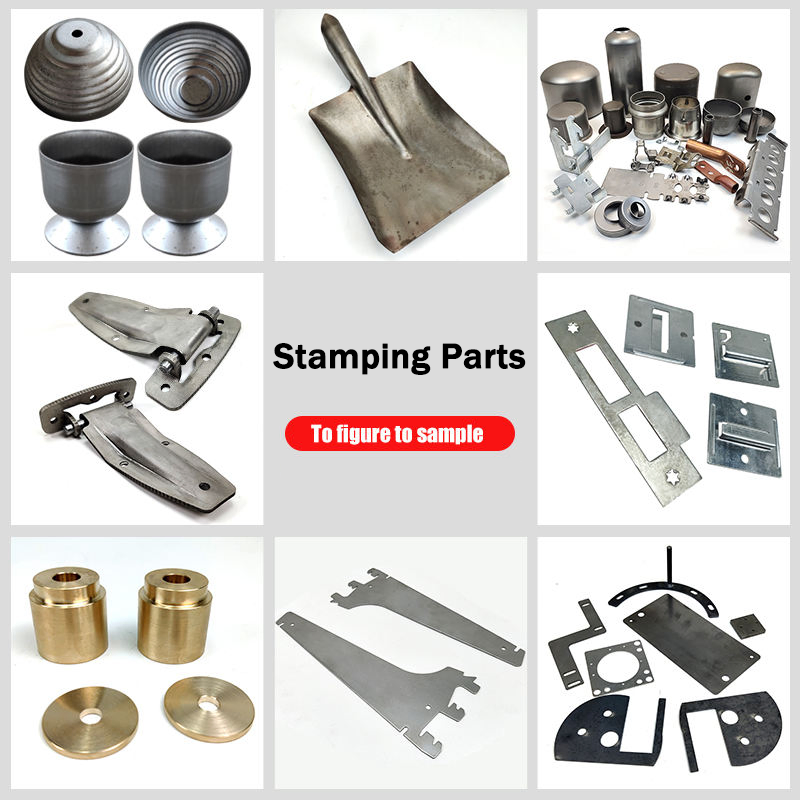
Industries use precision metal stamping when turning metal sheets into required shape and size for parts used in their products. These products are used in cars, airplanes, industrial engineering, medical, agriculture, electrical and electronics, and the list continues. LIHAO is equipped with the latest machinery, technology, manufacturing unit, and an exceptional team of experienced precision metal stamping professionals to serve you with great results.
Progressive Die Stamping Materials Comparison
| Material | Stainless Steel (SUS304) | Aluminum (5052) | Brass (C26000) | Carbon Steel (SPCC) |
| Thickness Range | 0.1–4.0 mm | 0.2–5.0 mm | 0.05–2.0 mm | 0.3–3.0 mm |
| Key Advantages | High strength Heat/corrosion resistant | Lightweight Easy to form | Excellent conductivity High ductility | Low cost High rigidity |
| Stamping Challenges | Rapid tool wear Work hardening | Scratches easily Low strength | Stress cracking Oxidation during forming | Springback control Rust prevention |
| Tooling Solutions | Carbide inserts TiN coating | High-polish die surfaces Water-based lubricants | Annealing between stages Nitrogen shielding | Overbend compensation Zinc plating |
Comparison Between Tooling Dies:
| Feature | Simple Die | Compound Die or Combination Die | Progressive Die | Transfer Die |
| Operations | Single operation | Multiple operations (single stroke). Very limited to design. | Multiple operations (sequence). Slightly limited to design. Some complex drawing operations would require a transfer die | Multiple operations (transfer between stations). Any operation process is possible. |
| Stations | One station | One station | Multiple stations | Multiple stations |
| Complexity | Low | Low to medium | High complexity | High complexity |
| Mold testing and set up | Easy | Difficult | Moderate. Modules reduce complexity and increase set up efficiency. | Usually easier than progressive, but requires transfer and lifting devices that are also complex to design. |
| Efficiency | Very low | Low | Very high | High. Slower than progressive given the required transfer operations. |
| Cost | Low tooling cost, high part unit cost | Medium tooling cost, medium part unit cost | High tooling cost, very low part unit cost | Normally higher tooling and unit cost than progressive |
| Production volume | Low volume | Medium to high volume | High volume (appropriate for mass production) | High volume, (appropriate for mass production) |
| Suitability | Simple parts | Simple parts | Complex parts | Larger and/or concave parts, complex parts |
| Material utilization rate | Moderate to high | Moderate to high | Moderate. The need for pilots and carriers can reduce material utilization. A good design can highly reduce the scrap produced. | Moderate to high |
| Blanking operation | 1 stroke | 1 stroke | The last operation | The first operation |
FAQ
What are the lead times for mold making?
With a ready-to-manufacture design, you can achieve lead times as fast as 2 weeks. But complex designs take several weeks to months.
Can I get a sample before mass production?
Yes, most of the stamping molding companies provide prototypes and first-article samples before mass production.
How do manufacturers ensure quality control?
Manufacturers ensure quality control in stamping molding through DFM optimization, in-line inspection, ISO systems, and third-party verification.