In modern metal stamping and coil processing industries, feeding accuracy plays a critical role in production quality, material efficiency, and overall manufacturing cost. Among the most widely used systems are the servo feeder and the mechanical feeder. Both are designed to feed metal coils into presses, but they operate on completely different principles.
The debate of servo feeder vs mechanical feeder accuracy comparison has become increasingly important as manufacturers demand higher precision, faster production speeds, and more flexible automation solutions.
This article provides a deep, practical analysis of how these two systems compare in terms of accuracy, performance, and real-world industrial applications. Whether you are upgrading a production line or selecting equipment for a new project, understanding these differences is essential.
What Is a Servo Feeder?
A servo feeder is a modern coil feeding system driven by a servo motor and controlled by a programmable controller. It precisely controls the feeding length, speed, and timing based on digital input.
Unlike traditional systems, servo feeders rely on closed-loop control systems, which continuously adjust performance based on feedback.
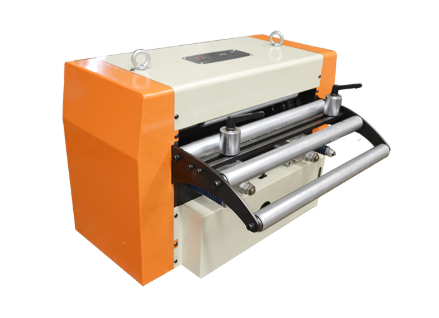
Key characteristics of servo feeders:
High precision digital control
Programmable feeding length
Adjustable speed and acceleration
Suitable for complex stamping operations
Integration with automation systems
In advanced production environments, brands like LIHAO Machine integrate servo feeding systems into fully automated stamping lines to improve consistency and reduce manual adjustment.
What Is a Mechanical Feeder?
A mechanical feeder is a traditional feeding system that uses the mechanical motion of the press machine itself. It typically relies on cams, gears, and link mechanisms to control material feeding.
Key characteristics of mechanical feeders:
Driven by press mechanical motion
Fixed feeding length (limited adjustability)
High durability and simple structure
Lower initial cost
Less flexibility in operation
Mechanical feeders have been widely used for decades and are still common in industries where production requirements are stable and do not require frequent changes.
Servo Feeder vs Mechanical Feeder Accuracy Comparison
When comparing servo feeder vs mechanical feeder accuracy, the most significant difference lies in control precision and adaptability.
1. Feeding Accuracy
Servo feeders offer significantly higher accuracy due to their digital servo control system.
Servo systems can compensate for errors in real time, while mechanical systems depend entirely on fixed motion transfer, which may degrade over time.
This makes servo feeders ideal for industries requiring tight tolerance stamping such as electronics, automotive parts, and precision hardware manufacturing.
2. Repeatability and Consistency
Repeatability is another critical factor in production quality.
Servo feeders maintain consistent feeding length even after long production cycles because their control system continuously calibrates movement.
Mechanical feeders, however, may experience slight variations due to:
Gear wear
Mechanical backlash
Lubrication conditions
Long-term vibration
Over time, these small deviations can accumulate and affect product quality.
3. Flexibility in Production
One of the biggest advantages of servo feeders is flexibility.
Servo systems allow operators to:
Change feeding length instantly
Adjust speed through software
Store multiple production settings
Switch between product designs quickly
Mechanical feeders require physical adjustments and sometimes even component changes to modify feeding parameters. This reduces efficiency in multi-product manufacturing environments.
4. Speed and Efficiency
Both systems can achieve high speeds, but servo feeders offer better optimization at different production stages.
Servo feeders:
Maintain stable performance at high speed
Reduce downtime for adjustment
Optimize acceleration and deceleration
Mechanical feeders:
In modern automated production lines, systems integrated by LIHAO Machine often use servo feeding units to maximize line efficiency and reduce bottlenecks.
5. Maintenance and Durability
Mechanical feeders are known for their robust and simple structure, which makes them easier to maintain in low-tech environments.
Servo feeders require:
However, servo systems reduce mechanical wear because they rely less on physical force transmission.
6. Cost Consideration
Cost is often a deciding factor when choosing between servo and mechanical feeders.
Servo feeders: higher initial investment, lower long-term waste and higher efficiency
Mechanical feeders: lower upfront cost, but potentially higher long-term inefficiency
For high-volume or precision manufacturing, servo feeders often deliver better return on investment despite higher initial pricing.
Application Scenarios
Servo Feeder Applications
Servo feeders are widely used in industries requiring high precision:
Mechanical Feeder Applications
Mechanical feeders are suitable for:
Simple stamping processes
Low variation production
Heavy-duty continuous operations
Cost-sensitive manufacturing environments
Key Advantages of Servo Feeders
Servo feeders are increasingly becoming the industry standard due to their advantages:
Ultra-high feeding precision
Digital control and programmability
Reduced material waste
Faster setup time
Integration with smart factory systems
Manufacturers using advanced production lines from LIHAO Machine often report improved consistency and reduced scrap rates after switching to servo systems.
Limitations of Mechanical Feeders
Although reliable, mechanical feeders have limitations:
Limited adjustability
Lower precision compared to servo systems
Higher wear over time
Less suitable for complex production
Manual adjustment required for changes
These limitations make them less ideal for modern flexible manufacturing environments.
Servo Feeder vs Mechanical Feeder: Which One Is Better?
The answer depends on production requirements.
If your priority is precision, flexibility, and automation, the servo feeder is clearly the better choice.
If your production is simple, stable, and cost-sensitive, the mechanical feeder may still be sufficient.
In today’s competitive manufacturing landscape, many companies are gradually shifting toward servo technology because of its long-term efficiency benefits.
Future Trend of Feeding Systems
The future of industrial feeding systems is clearly moving toward automation and intelligence.
We can expect:
More AI-assisted feeding control
Integration with Industry 4.0 systems
Higher precision servo mechanisms
Predictive maintenance systems
Fully automated stamping lines
Companies like LIHAO Machine continue to develop smarter feeding solutions that align with these trends, helping manufacturers improve productivity and reduce operational costs.
Conclusion
The servo feeder vs mechanical feeder accuracy comparison clearly shows that servo feeders outperform mechanical feeders in precision, flexibility, and long-term production efficiency.
While mechanical feeders still hold value in certain stable and low-cost applications, the demand for higher accuracy and automation is driving the industry toward servo-based systems.
Choosing the right feeder depends on your production needs, but for modern manufacturing environments that require high precision and adaptability, servo feeders are the superior solution.